
 English
 русский
 Español

Floor slotting line (double end tenoner)
The product can slot the floor vertically and horizontally. The machine series c...
See DetailsAsk anyone who has commissioned a flooring plant what surprised them most, and the answer is rarely about the machines themselves. It is usually about the gap between what a brochure promised and what the material actually did on the first shift. SPC boards behave differently from a laminated core. Fiber calcium silicate behaves differently again. Floor processing equipment only performs when it is matched honestly to the substrate, the edge profile and the volume you intend to run.
That is the perspective we work from at HAWK Machinery. We have been building flooring and wall panel machinery in Jiangsu since 2005, and most of what we know came from standing on customer floors while the first boards ran through the line. This guide is written in that spirit: fewer slogans, more of the things that actually decide whether a line earns its keep.
Content
On a modern flooring line the term covers every station between the raw board stack and the wrapped, palletized carton. Rip cutting reduces large-format boards to strips of controlled width. Slotting and tenoning form the click profile and the tongue-and-groove edges that decide whether two planks really lock together. Beveling defines the visible chamfer. V-groove painting seals and colors the joint line and then cures it. CNC contour cutting handles PVC products that a straight-line machine cannot shape. Above all of them sits the control layer, where production lines and MES software connect the stations and make the data visible.
It is easier to think in four families than in dozens of individual machines: preparation and ripping, edge profiling, surface and edge finishing, and line integration. The table below maps them out.
| Station | What It Does | Typical Equipment |
|---|---|---|
| Rip cutting | Cuts large-format boards into strips of exact width | Multi-rip saw machine |
| Slotting and tenoning | Forms the click profile, tongue and groove on both ends | Double-end tenoner, slotting line |
| Beveling | Defines the chamfered edge visible after installation | High-speed beveling line |
| V-groove painting | Seals and colors the joint line, then cures it | V-groove painting line |
| Contour cutting | Cuts PVC planks into non-linear shapes and outlines | PVC CNC cutting production line |
| Line control | Links stations and exposes live production data | MES production management system |
None of these stations is difficult in isolation. The difficulty lies in how they behave together, and in whether the equipment you buy can still hold tolerance when the board you feed it changes. If you would like to go deeper on that, a closer look at floor processing equipment walks through the same stations from a shop-floor angle.
Every later operation inherits the tolerance of the first cut. If a rip saw drifts by a fraction of a millimeter on a thin SPC core, no amount of precision at the tenoner will recover the finished plank. This is why we spend so much time talking about roller drive systems, blade configuration and how a machine copes with variable thickness in continuous production, rather than simply quoting a maximum feed speed on a specification sheet.
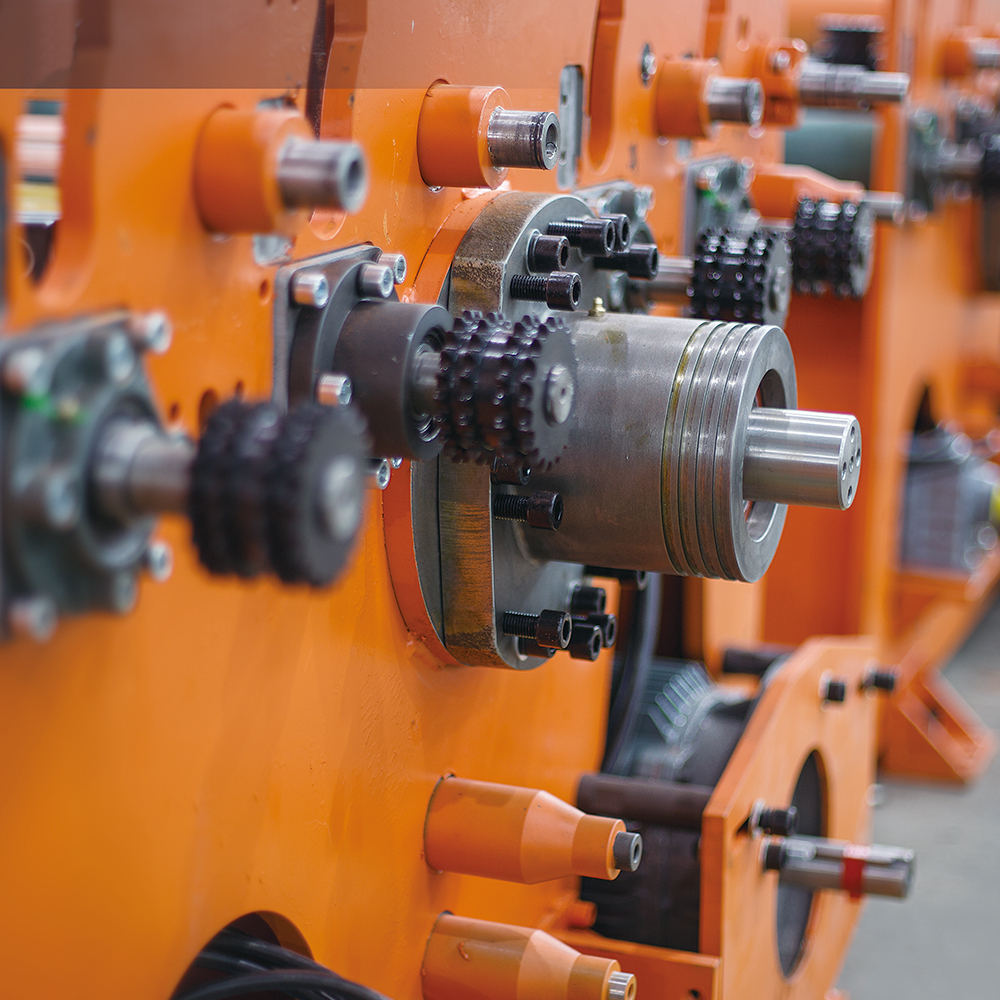 Multi Rip Saw for SPC, LVT, WPC and Engineered FlooringPrecision multi rip saw with roller drive and adjustable blade depth, helping maintain repeatable first cuts on SPC, LVT and WPC boards.View Product →
Rip cutting is also the station where material waste is decided. A clean, repeatable cut with a narrow kerf is worth more over a year of production than a marginally faster machine that produces more scrap and more blade changes.
A double-end tenoner machines both ends of the plank at the same time, which keeps the tongue and the groove in a fixed relationship to one another regardless of board length variation. That relationship is what the end user feels when they click two planks together. A beveling line then applies the chamfer that gives the installed floor its depth and hides the joint line at the same time. These two operations are usually specified together, because the profile geometry and the bevel angle have to agree.
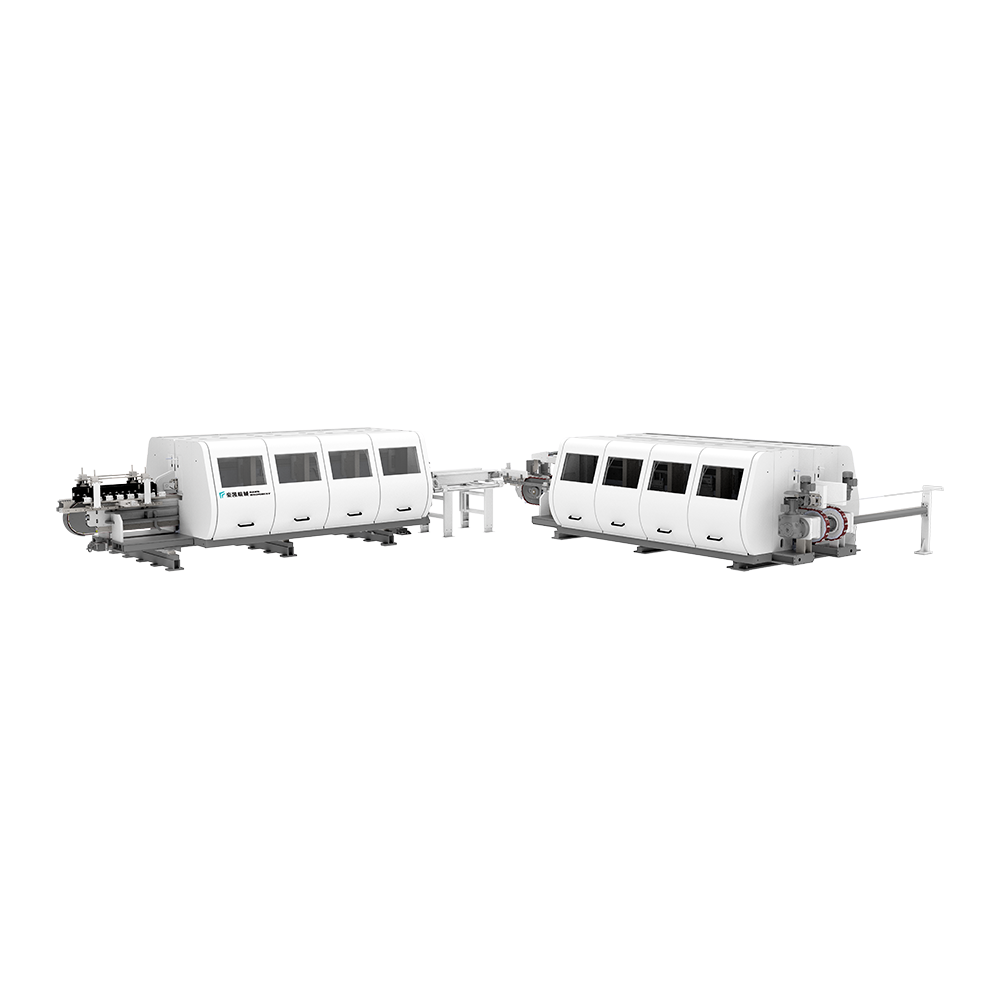 Floor Slotting Line Double End Tenoner for Tongue and GrooveProcesses both plank ends simultaneously with rolling chain drive, supporting consistent tongue-and-groove alignment across six model configurations.View Product →
When customers ask us where quality problems usually originate, the honest answer is here. Tooling setup, transfer alignment and consistent clamping pressure matter more than the headline horsepower of the machine.
V-groove painting is where a floor either looks finished or looks unfinished. The line presses paint into the V that runs along the plank joint and then cures it, so the joint keeps its color through wear, cleaning and moisture. Film thickness, line speed and oven profile all interact, and the settings that suit a laminate board will rarely suit a WPC board without adjustment.
SPC, WPC, LVT, laminate, multilayer engineered wood, fiber calcium silicate and wall panels do not share the same machining behavior. Density, filler content, brittleness and heat sensitivity all differ, and each one pushes the process in a slightly different direction. A machine that was tuned for one substrate can usually be adapted for another, but it has to be designed with that adaptation in mind from the start: adjustable tooling, configurable pressure zones, and control parameters the operator can actually reach.
PVC deserves a category of its own. It is softer than mineral-filled cores, more sensitive to clamping pressure and cutting heat, and frequently needs shapes a straight-line machine cannot produce at all, such as planks with cut-outs or irregular outlines. That is why a dedicated CNC cutting production line exists for PVC flooring rather than a woodworking machine pressed into service.
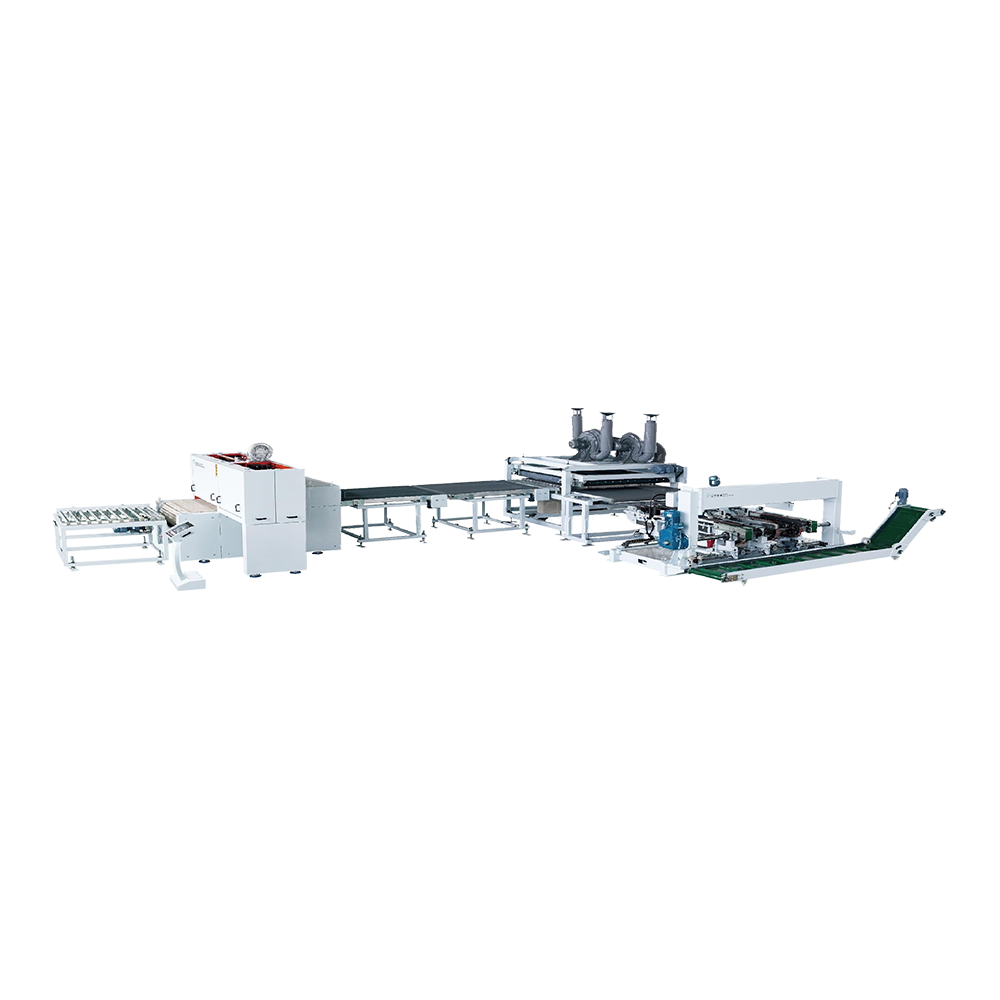 PVC Floor CNC Cutting Production Line for Complex Floor DesignsMulti-axis CNC cutting line with crawler transmission and independent saw blade control, suited to curved, beveled and custom PVC floor patterns.View Product →
Wall panel processing follows much the same logic as flooring: sawing, edge profiling and surface finishing, with slightly different dimensions and a greater tolerance for decorative variation. Because the process chain overlaps so heavily, plants that already run flooring equipment can often extend into wall panels without building a second line from the ground up.
When a plant moves from one machine to three, the problems change shape. Individual machines may each be excellent, but the buffers between them are too small, the transfer heights do not line up, or one slow station quietly sets the pace for the whole shift. This is the stage where an automatic floor production line starts to make sense, not because automation is fashionable, but because a linked line removes the manual handling that creates variation.
Above that sits production management. An MES layer records what actually happened: which order ran, at what speed, with how much downtime, and at what yield. That data turns arguments about "the machine is slow" into a conversation about where the time really goes. For medium and large factories, it is often the difference between guessing and improving.
After two decades of these conversations, the questions that actually matter tend to be the same ones every time. If you are evaluating a supplier, work through this list before you compare prices.
Equipment that arrives and works is the minimum standard, not an achievement. What matters afterward is whether the people running the line understand why the parameters are set the way they are, and who they call when a profile starts drifting at two in the morning.
Our own approach has been shaped by that reality. We hold a national high-tech enterprise designation, provincial recognitions for specialization and technology, more than fifty self-developed patents, and CE and ETL certification for our products. We also carry a team of over 200 people, which is the part that actually answers the phone. Our after-sales commitment is simple: we stay responsible for what we have already sold.
If there is one piece of advice worth repeating, it is this. Buy floor processing equipment for the plant you will be running three years from now, not the one you are running today — and choose a partner who will still be there when the second line goes in.
If you would like to talk through a specific substrate, profile or output target, we are happy to work through the numbers with you. Start with our floor processing equipment overview, or send us the plank drawing and let us tell you honestly which stations you need and which ones you can wait on.
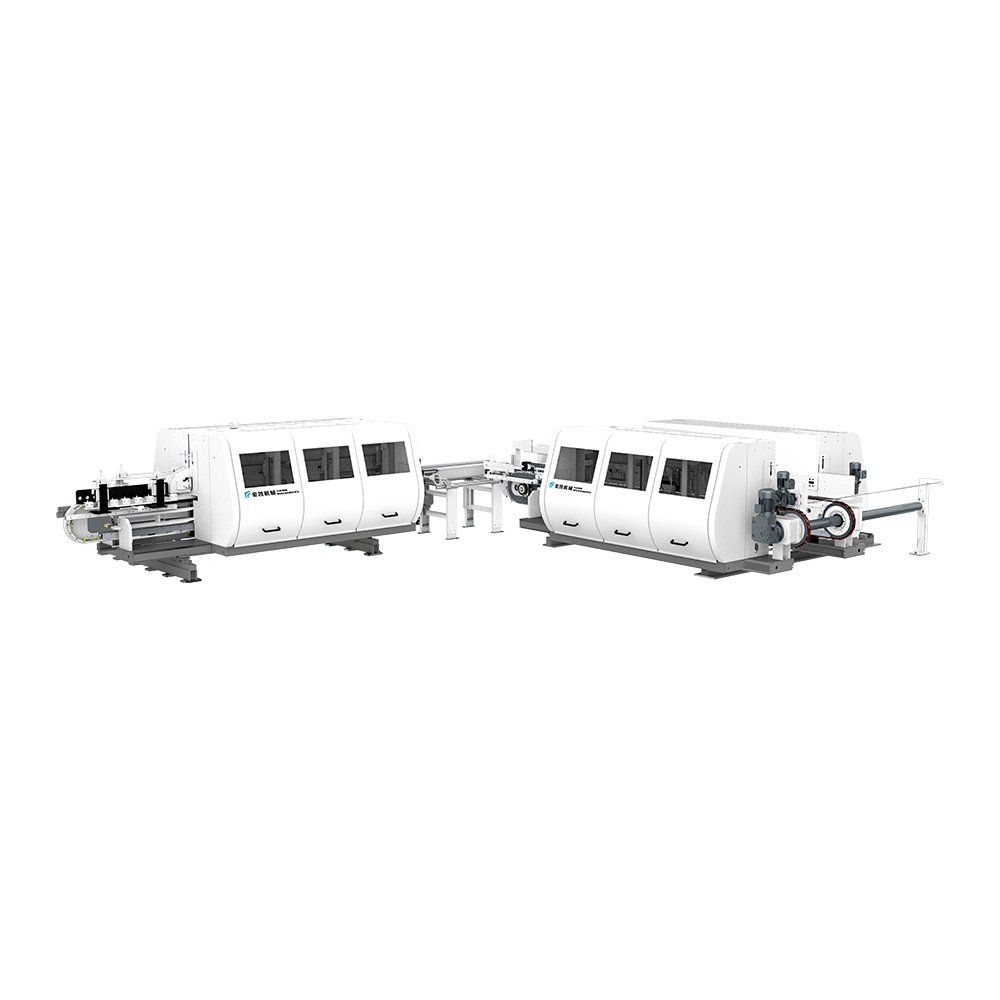
The product can slot the floor vertically and horizontally. The machine series c...
See Details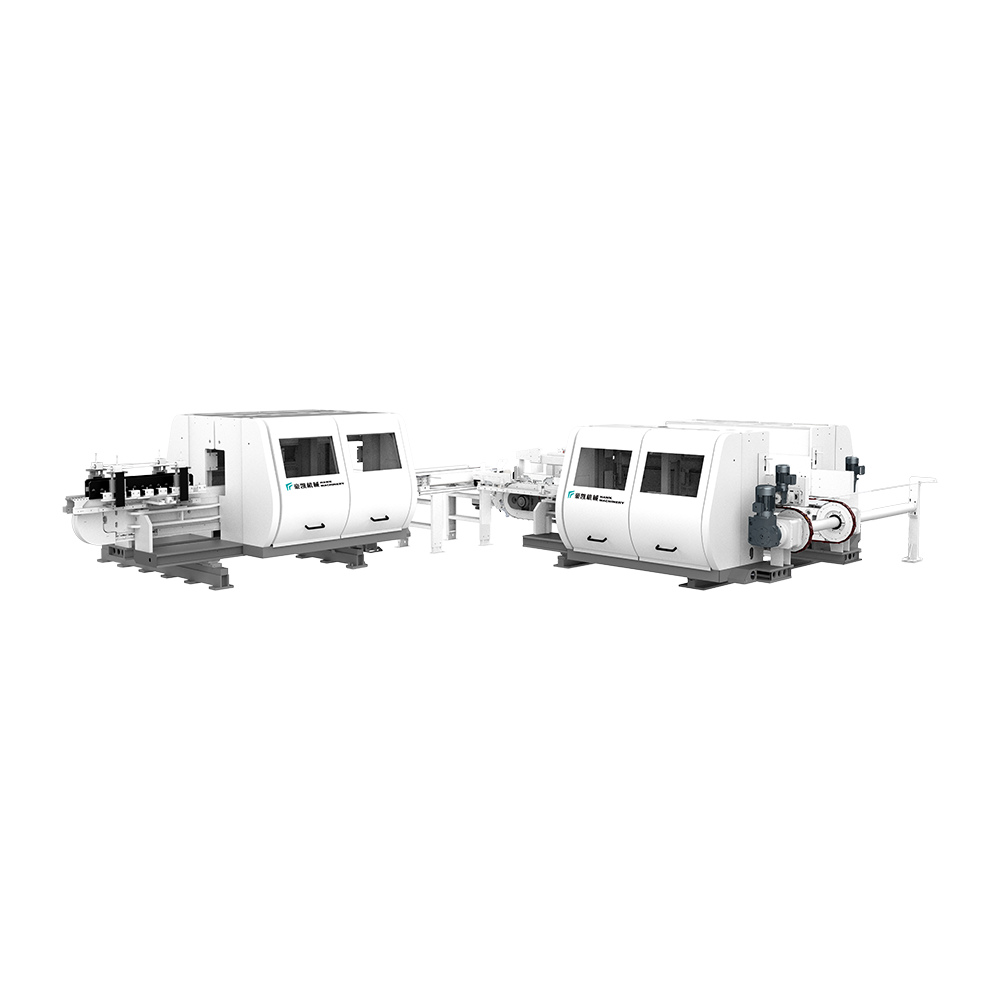
This equipment is suitable for trimming and chamfering LVT flooring. Equipped wi...
See Details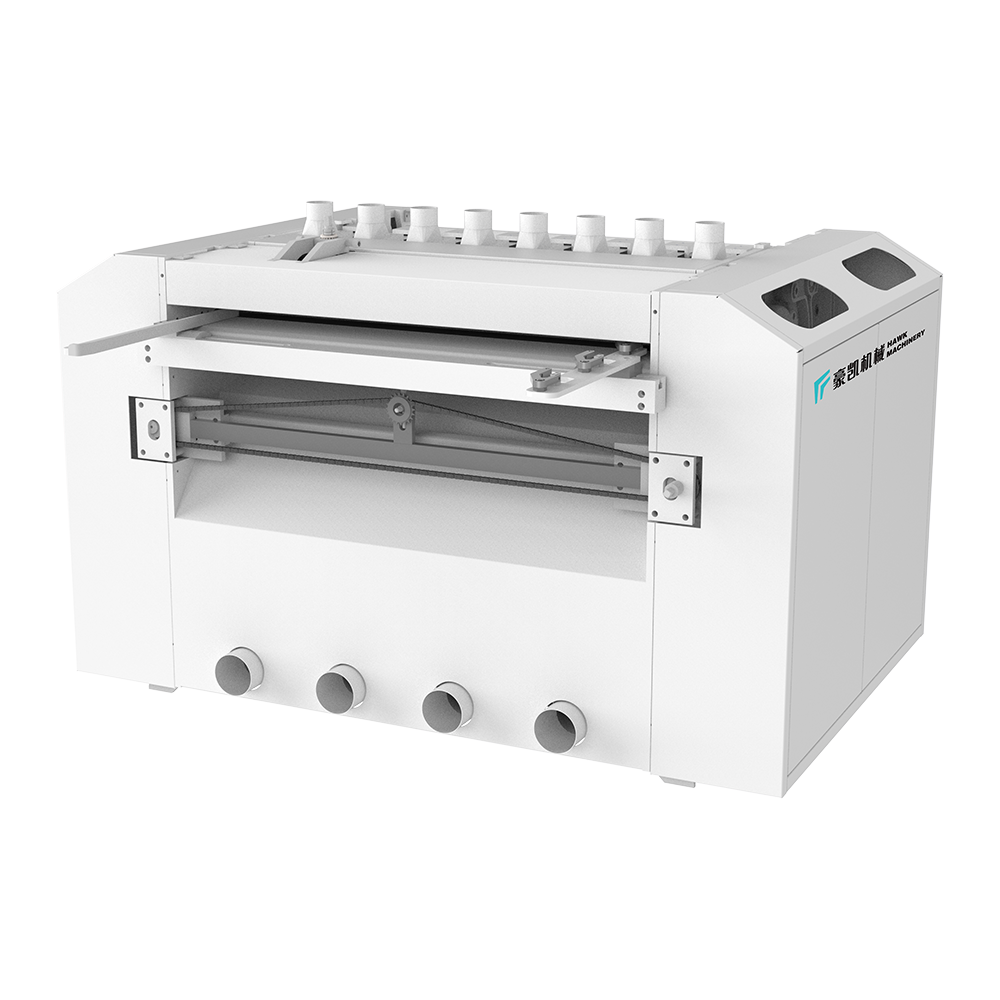
Different transmission sawing methods are suitable for different board processin...
See Details
The feed speed of this equipment can reach 40 meters per minute, the whole frame...
See Details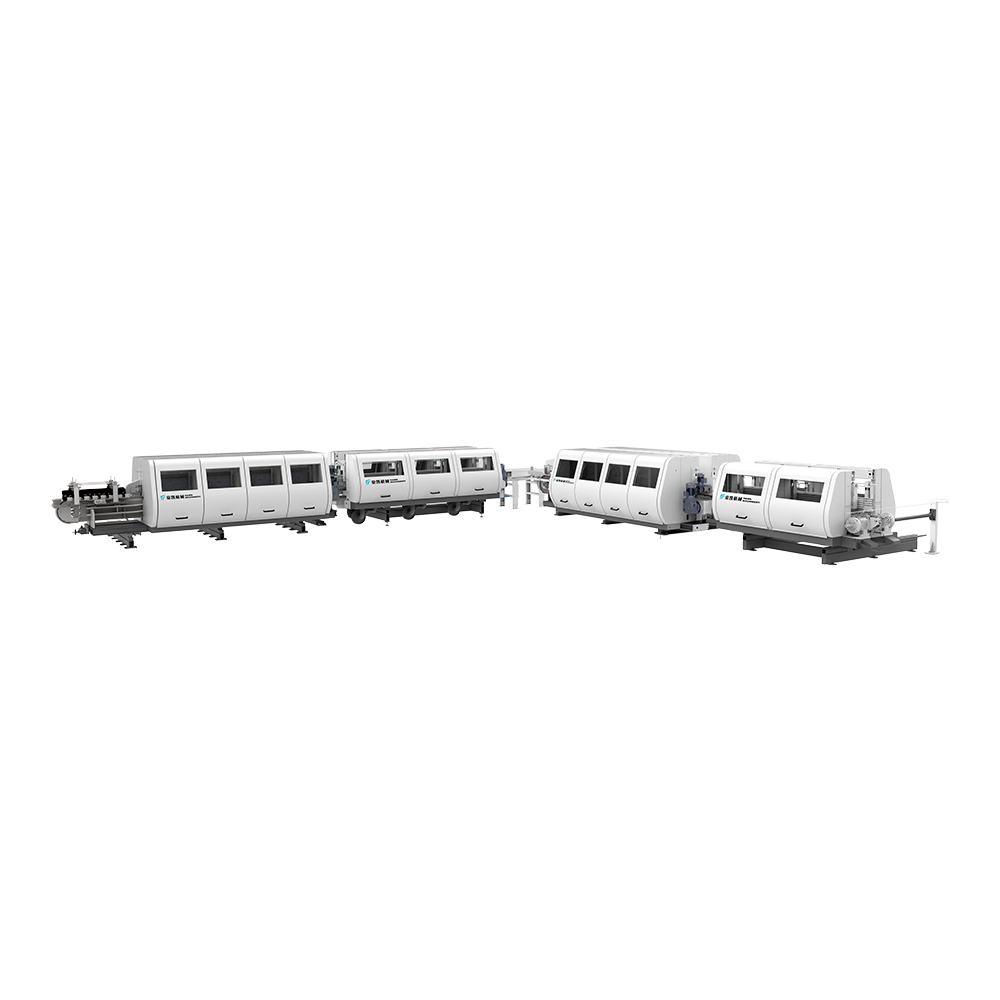
Suitable for edge coating of laminated, PVC, and WPC. Using water-based paint is...
See Details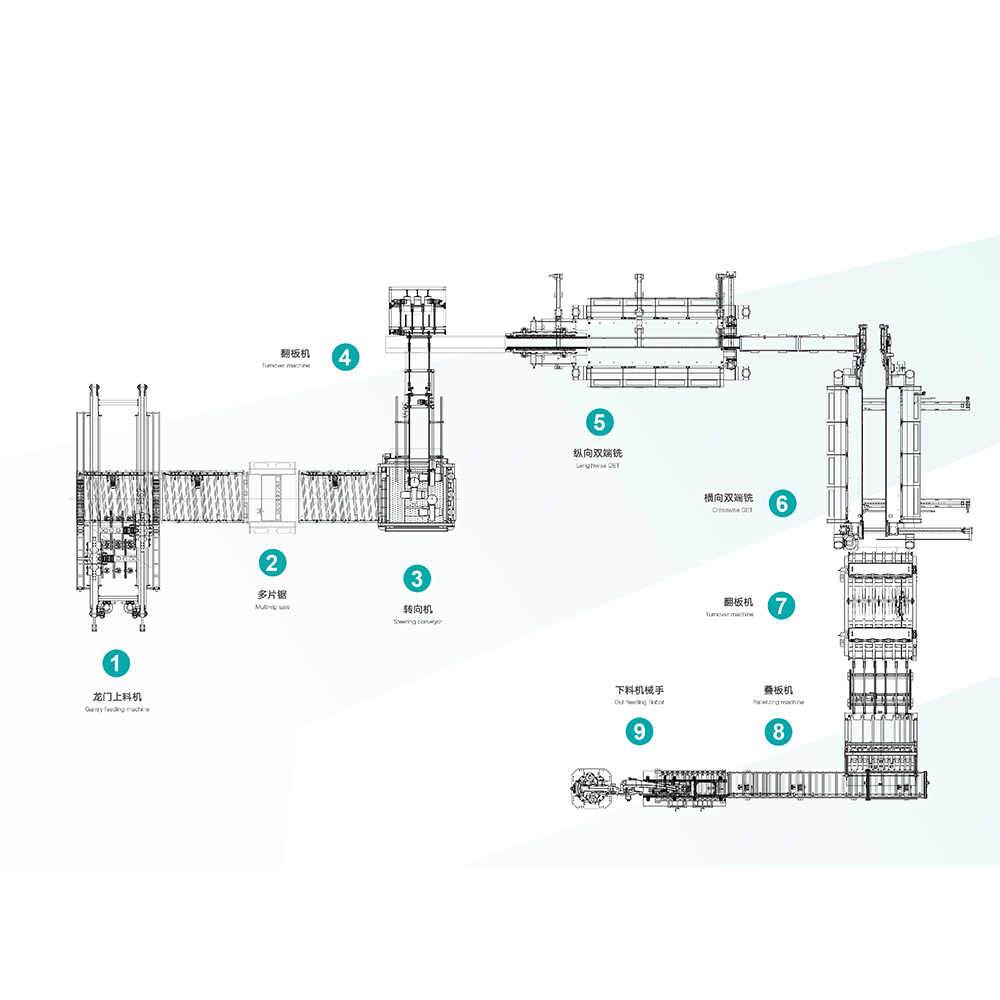
Hawk Machinery automatic feeding, cutting & slotting line, suitable for SPC,...
See Details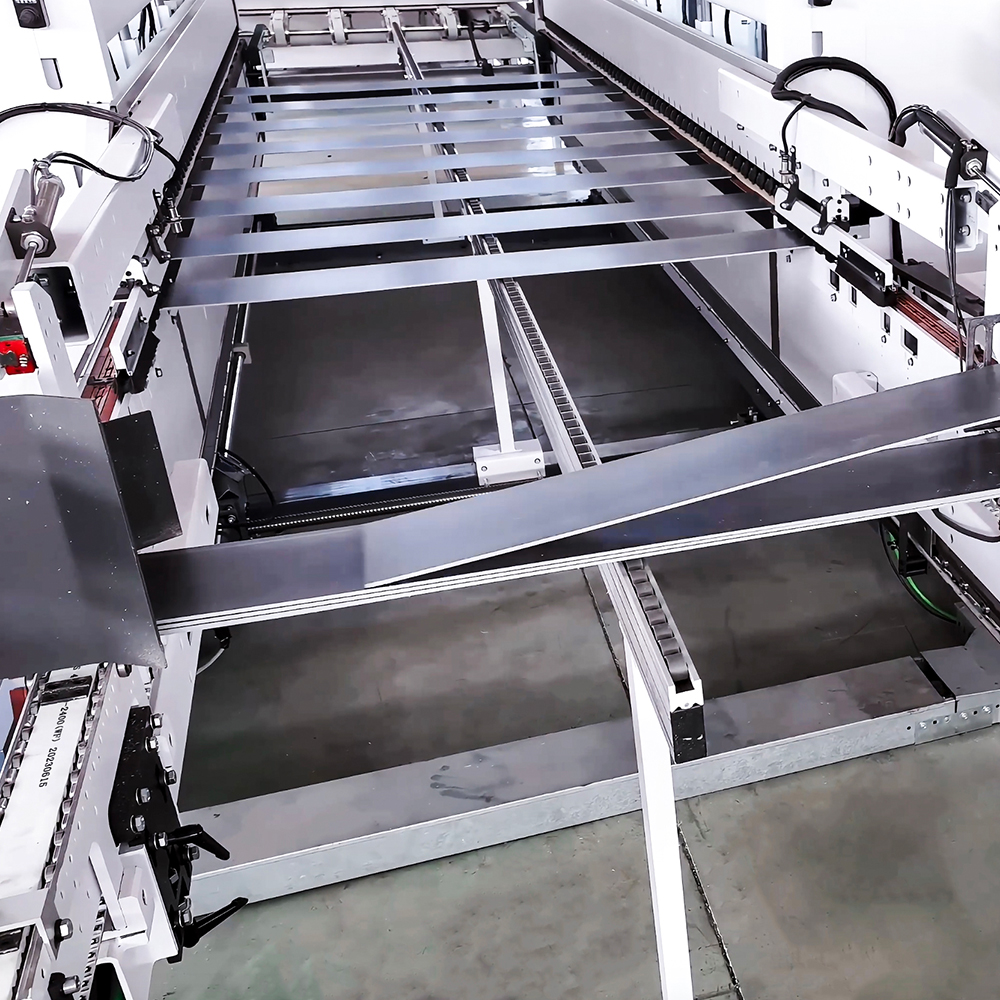
Integrated intelligent equipment integrates industrial intelligent Internet of g...
See Details
Contact info.
Boyi development area, changzhou city, jiangsu province, P. R. China
+86-0519-83319988
Don't hesitate to contact when you need us!
 Custom Floor Extrusion Machine Manufacturers